Jordan Foster · 19 September 2026
Riverbank Cleanup Reveals Clues to Old Mill's Hidden Past as Restoration Work Begins
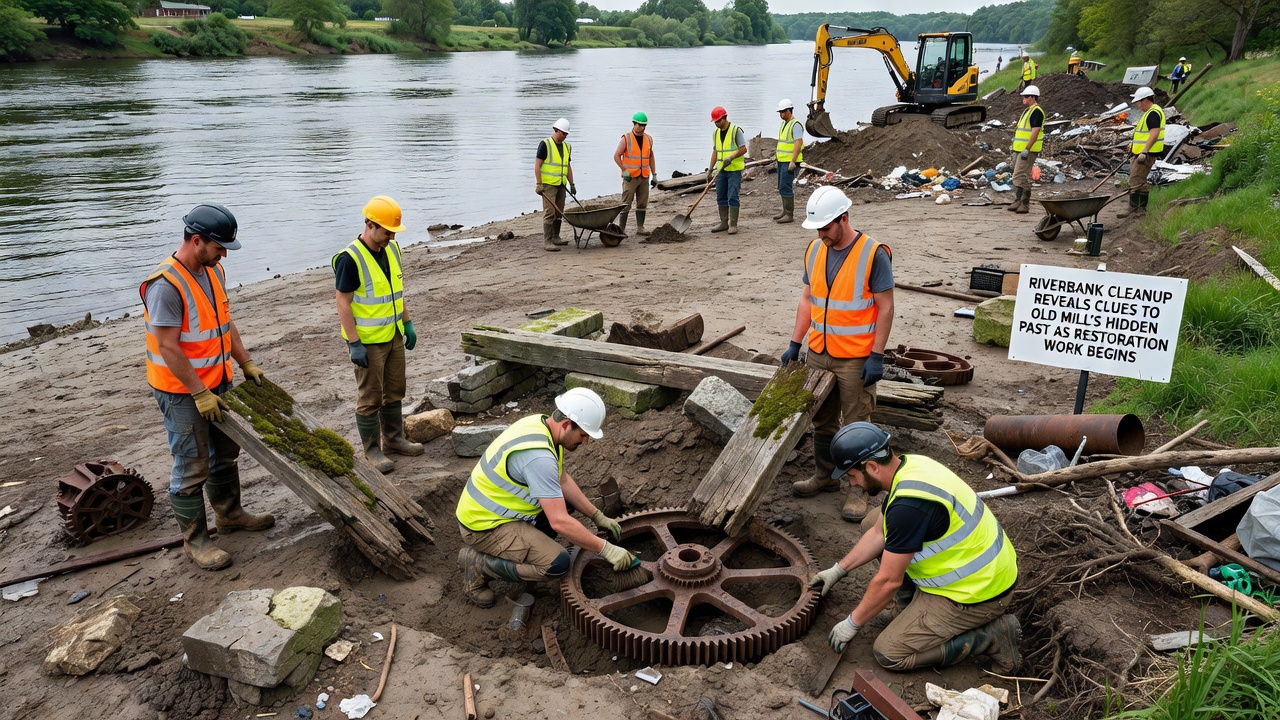
Teams began clearing accumulated debris and sediment from the riverbank last month, and the effort quickly turned up structural remnants along with scattered artifacts that point to an industrial site long buried under layers of soil and vegetation. Workers uncovered sections of foundation stone, fragments of wooden gearing, and rusted metal components consistent with 19th-century milling equipment, all while preparing the area for broader ecological restoration scheduled to start in September 2026.
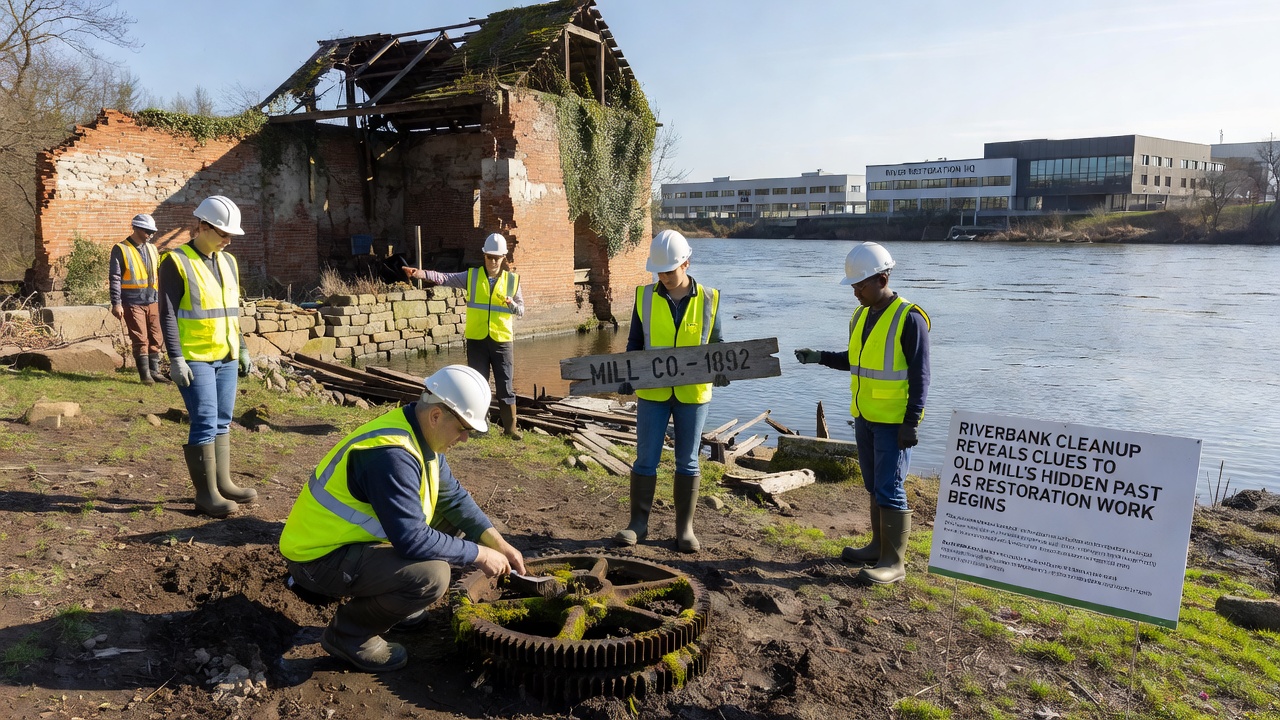
Local historical records indicate a grist mill operated at the location from the 1840s through the early 1900s, yet few physical traces remained visible before the cleanup crews arrived. The newly exposed elements include a partial millrace channel lined with hand-cut limestone blocks and several iron fittings that match descriptions in period engineering journals. Researchers from the regional heritage society cataloged each item on site, noting that the finds align with earlier maps showing the mill's original footprint.
Discovery Process and Initial Findings
Archaeologists joined the cleanup crews after the first artifacts surfaced, shifting from standard debris removal to controlled excavation in targeted zones. They documented layers of fill material that had been deposited over decades, revealing how the riverbank had been altered both by natural flooding and by later industrial dumping. Among the items recovered were ceramic shards from grinding wheels, leather belting remnants, and a brass nameplate stamped with the mill owner's initials, all preserved in anaerobic soil conditions that prevented rapid corrosion.
Analysis of soil samples taken alongside the artifacts shows elevated levels of organic residues typical of grain processing, supporting the conclusion that the site functioned primarily as a flour mill rather than a sawmill or textile operation. Carbon dating of preserved wood fragments places the earliest construction phase in the mid-1840s, a timeframe that matches tax ledgers from the county archive. The combination of physical evidence and documentary cross-referencing allows historians to reconstruct daily operations without relying solely on written accounts.
Restoration Timeline and Next Steps
Restoration planners have incorporated the new archaeological data into site designs that will protect the exposed foundations while improving river flow and habitat connectivity. The September 2026 start date for major earth-moving work will follow completion of a non-invasive survey using ground-penetrating radar to map any additional subsurface features. Crews will then install interpretive walkways and signage that highlight the mill's role in the area's agricultural economy without disturbing the remaining structural elements.
Funding for the combined cleanup and heritage interpretation comes from a mix of state environmental grants and private donations earmarked for historic preservation. Project managers report that the unexpected findings have extended the initial assessment phase by six weeks, yet the delay has also strengthened community support for the overall initiative. Similar riverbank projects in other regions have demonstrated that integrating archaeological monitoring early in the process reduces long-term costs and produces richer public education outcomes.
Broader Context of Industrial Archaeology
Studies conducted by the National Park Service on comparable mill sites across the Northeast show that river-adjacent facilities often leave complex stratigraphic records shaped by both operational waste and periodic floods. The current project follows those established protocols, ensuring that each layer is photographed, sampled, and recorded before any further disturbance occurs. Data from the site will contribute to a national database of 19th-century milling operations maintained by the Society for Industrial Archeology.
Observers note that the artifacts recovered so far provide tangible links to the daily labor patterns of mill workers, including evidence of on-site repairs and improvised machinery modifications. One particularly intact wooden pulley assembly still bears tool marks from repeated sharpening, illustrating the resourcefulness required to keep equipment running in an era before standardized replacement parts. Such details add nuance to broader economic histories that often focus on production volumes rather than maintenance practices.
Conclusion
The riverbank project continues to yield information that refines the documented history of the mill and its surrounding landscape. As preparations advance toward the September 2026 restoration phase, project leads expect additional findings to emerge once larger sections of overburden are removed under controlled conditions. The integration of ecological goals with heritage protection offers a model for other communities facing similar overlaps between environmental remediation and historic preservation priorities.